Joblat, powered by HDI Seguros
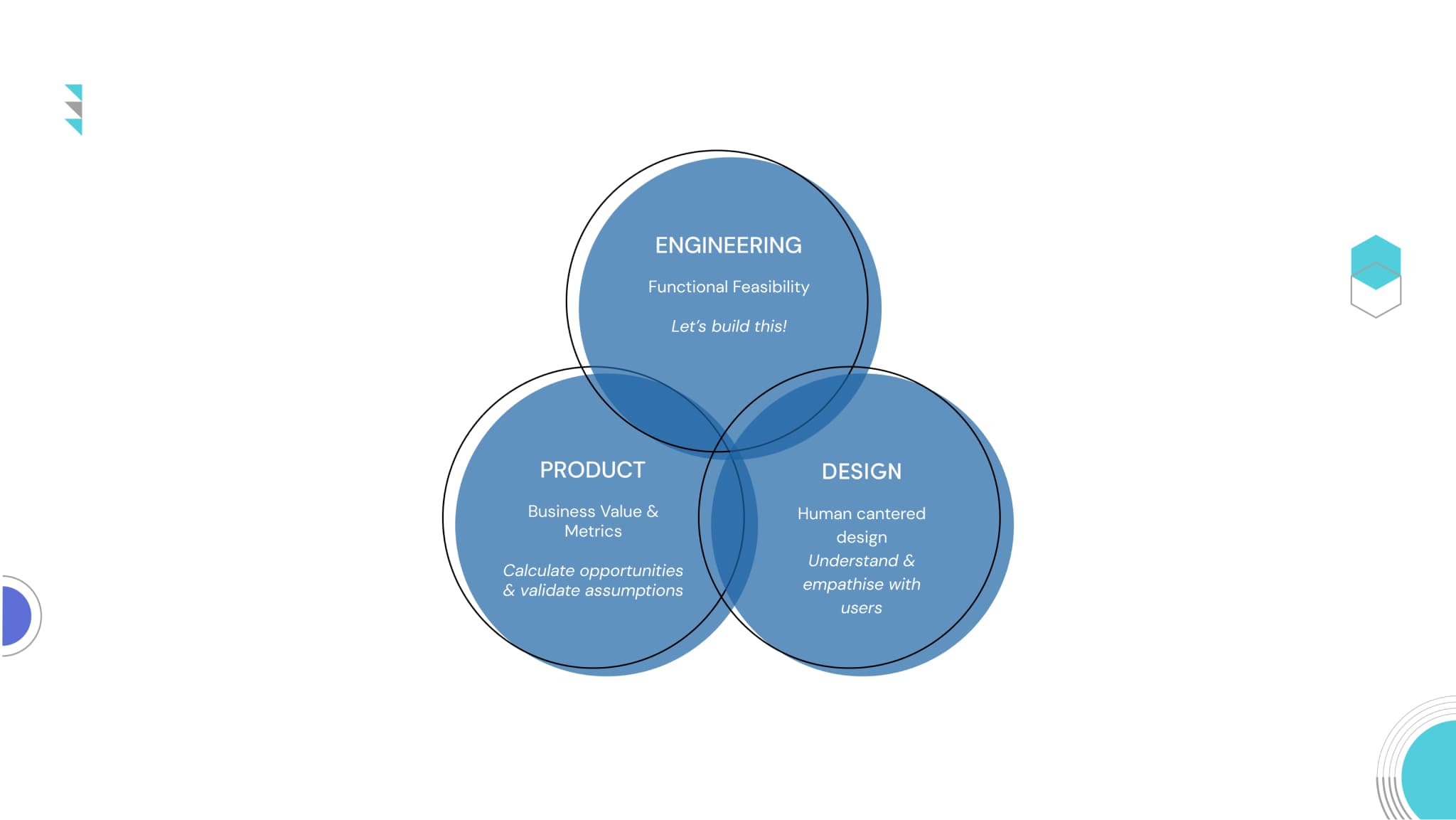
•Role: Lead Designer (acting PM), roadmap, prioritization, UX flows, prototypes, testing, design system
•Team: PO/PM, researchers, devs (React + Java); two-week sprints (design→dev overlap)
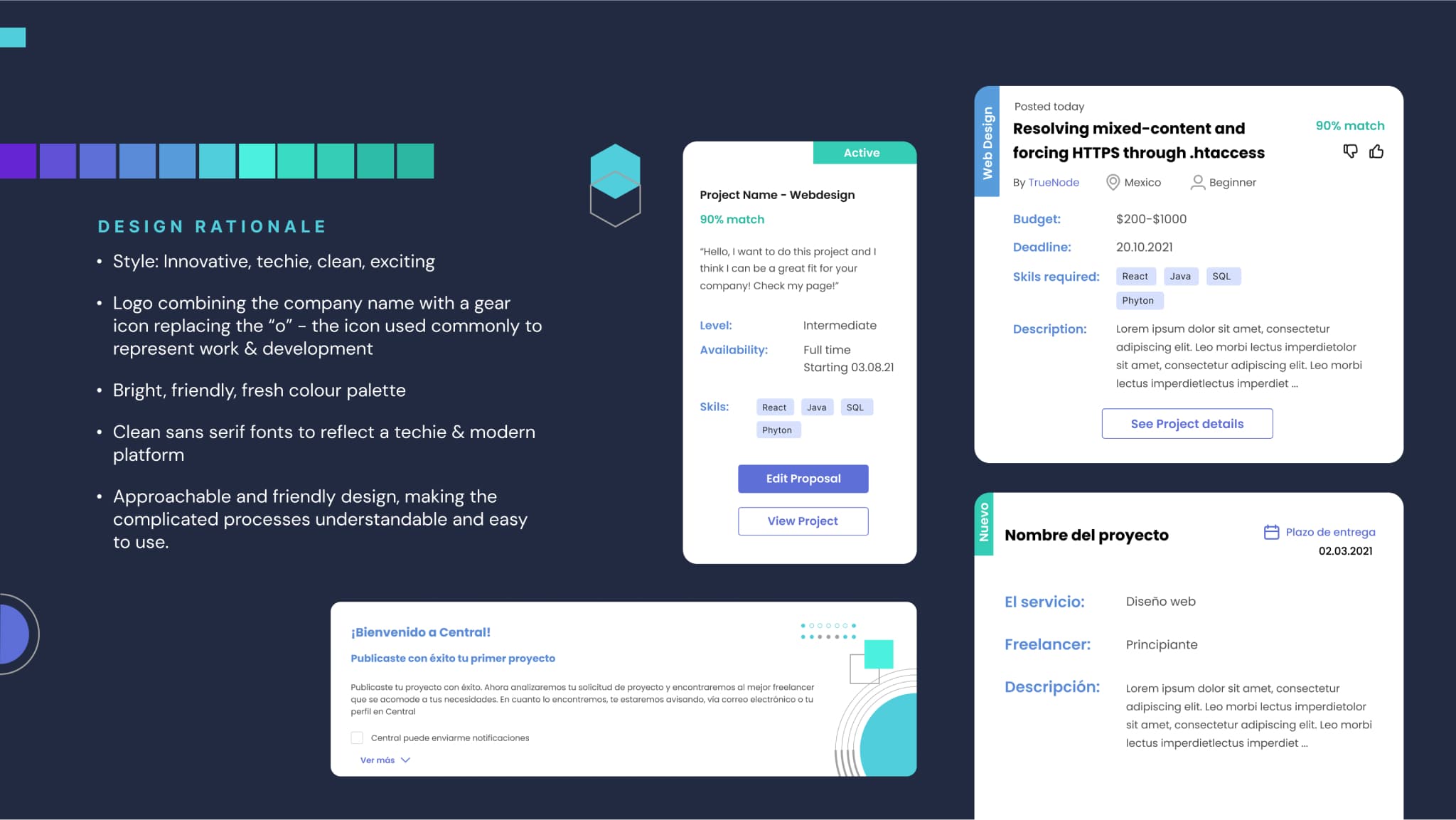
•Scope: Onboarding, search/match, project spaces, payments, admin dashboard; component library in Figma
•Outcome: Beta in 2 months, v2 in +2 months; 5,000+ active users in first 3 months
•Why it matters: De-risked a new product in a complex LATAM market; shipped a usable marketplace quickly with evidence-led decisions
Context
HDI Seguros (one of the largest insurance groups) explored a new venture: a freelance platform connecting SMEs ↔ top talent in Latin America. Success hinged on fast validation, cultural fit, and a credible end-to-end flow (from discovery to payment).Client Feedback:"Great performance."Mario AlbarranCMO - HDI Mexico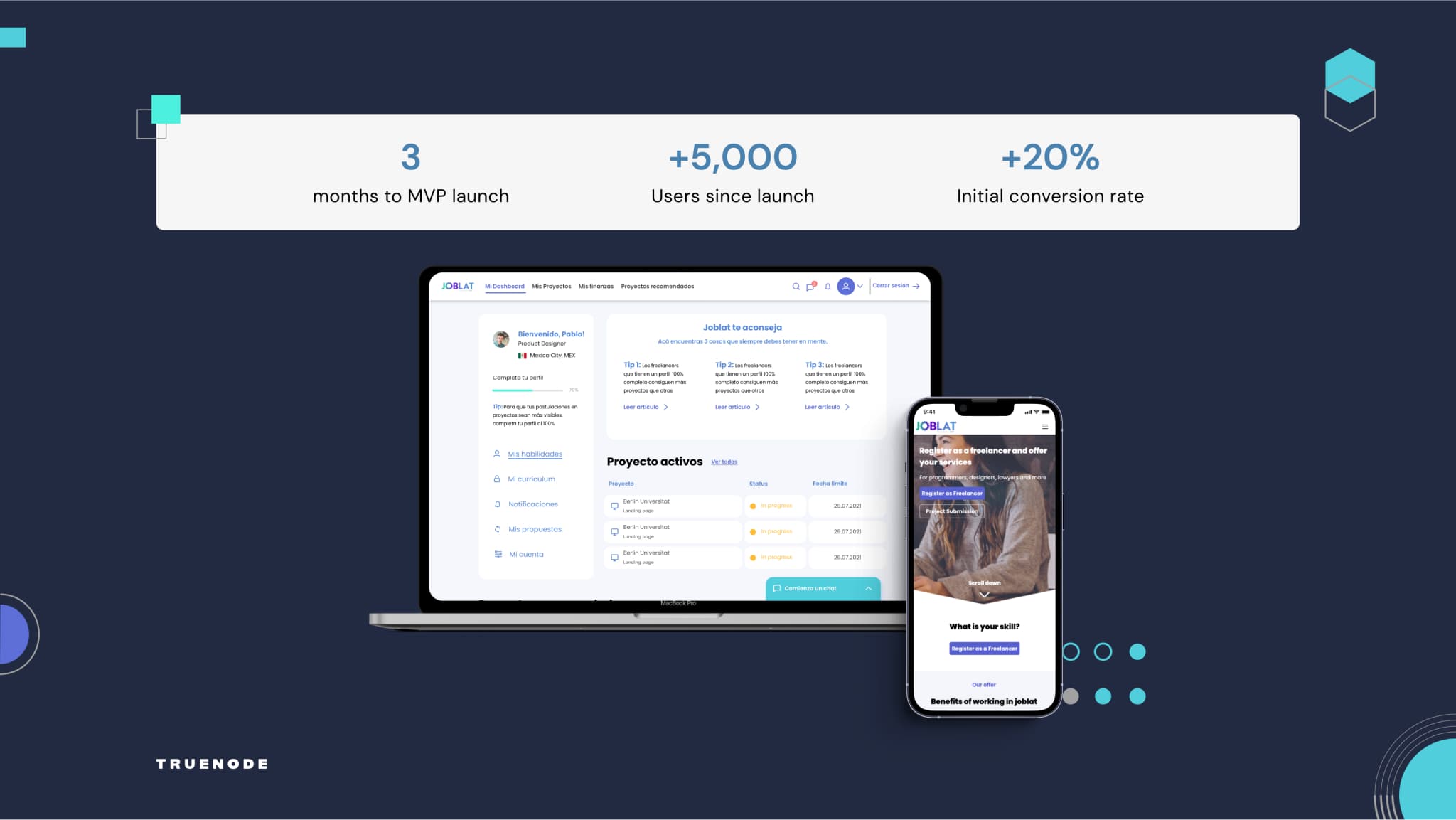
Problem
•Two-sided cold start: SMEs need quality/fit; freelancers need opportunities and trust, both sides hesitate without proof.
•Regional realities: payment preferences, language/terminology, and expectations vary across LATAM.
•Delivery pressure: prove value fast (weeks, not quarters) while avoiding throwaway work.
Strategy
•Design around first value: minimize time from signup → matched conversation → funded engagement.
•Trust by design: verified profiles, transparent rates/availability, and clear proposal steps.
•Guided matching: structured briefs + talent facets (skills, seniority, availability, language).
•Sprintable system: build a component library early to ship consistent flows every two weeks.
•Evidence loop: interviews + usability tests each sprint; instrument funnels for sign-up, match, and payment.
Results
•Speed: MVP beta in ~8 weeks, second release ~8 weeks later.
•Adoption: 5,000+ active users in the first 3 months post-beta.
•Delivery confidence: repeatable sprint rhythm; handoff defects reduced via componentized specs.
My role & leadership
•Acting PM + Lead Designer: prioritized the backlog, mapped journeys, wrote user stories & acceptance criteria.
•Design system owner: tokens, components, states, usage guidance; accelerated dev by "designing once, reusing often."
•Research & testing: coordinated interviews (freelancers & SMEs), ran prototype tests, and fed findings into the next sprint.
•Stakeholder alignment: weekly decision notes, demo scripts, and risk/impact trade-off calls.
•Dev partnership: annotated specs, QA playbooks, and paired reviews to hit sprint goals.
Solution highlights
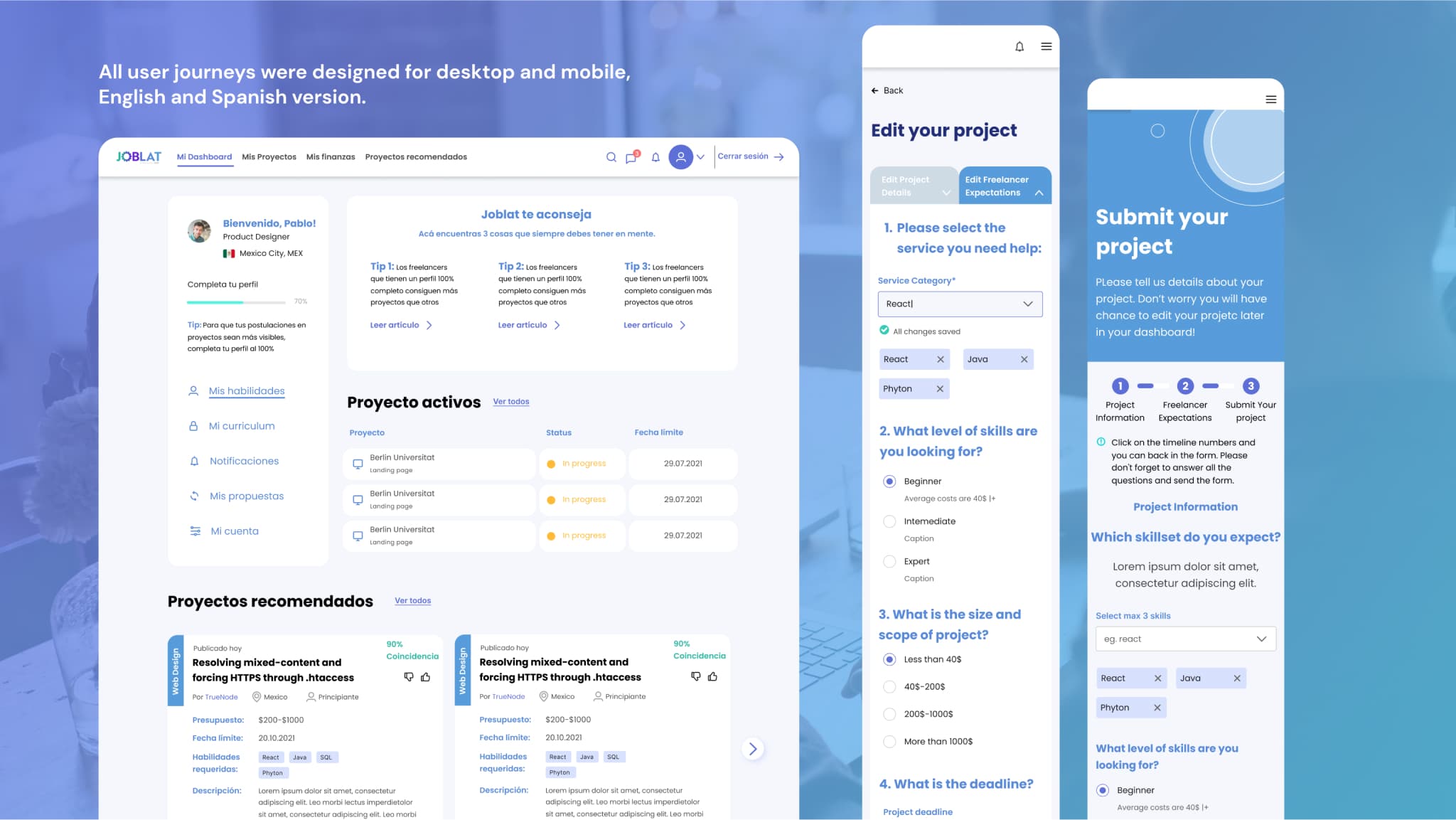
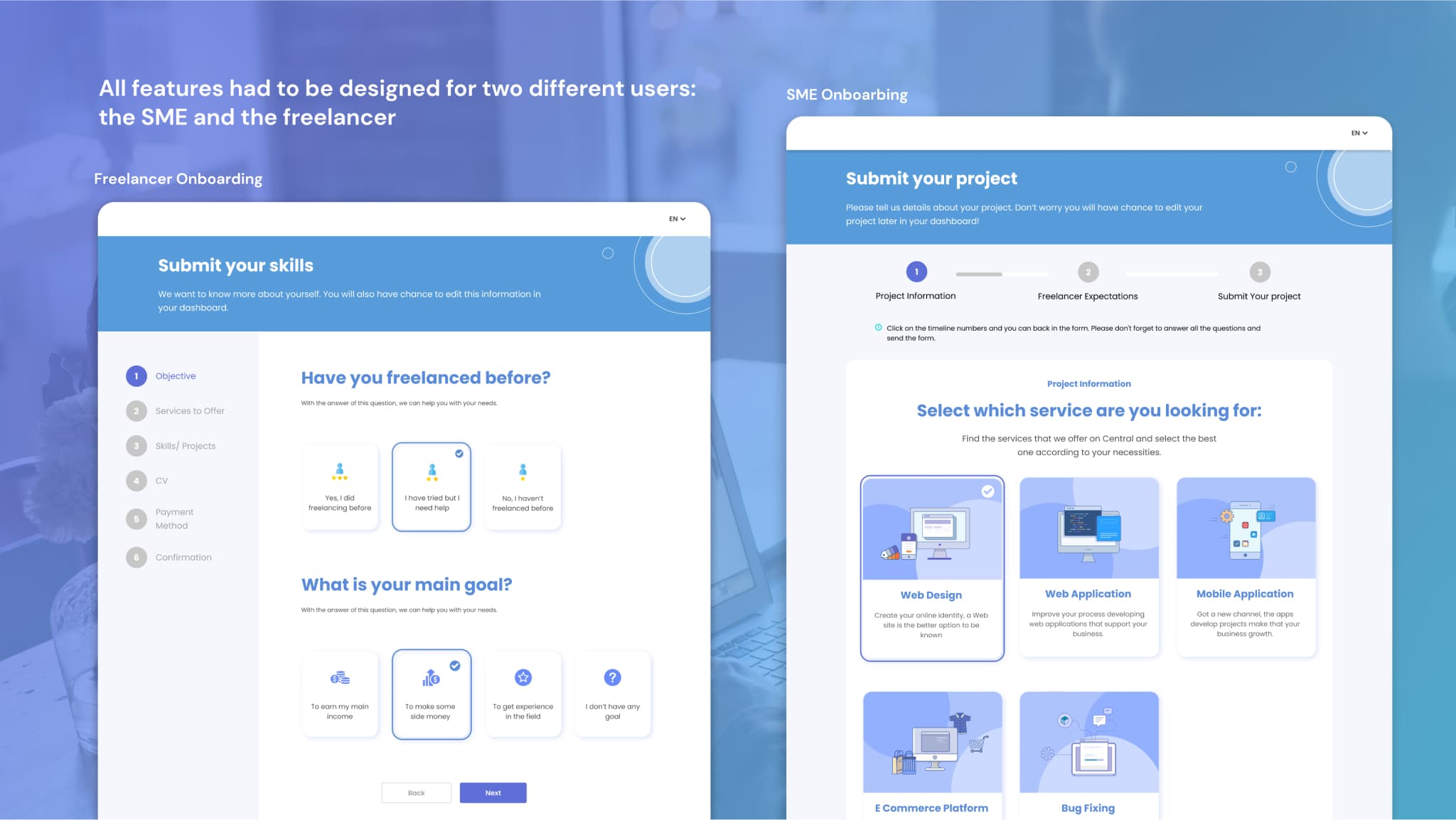
•Friction-light onboarding for both sides; profile completeness indicators to reach "matching-ready."
•Brief wizard that captures scope, budget, timeline, and required signals (skills, language, seniority).
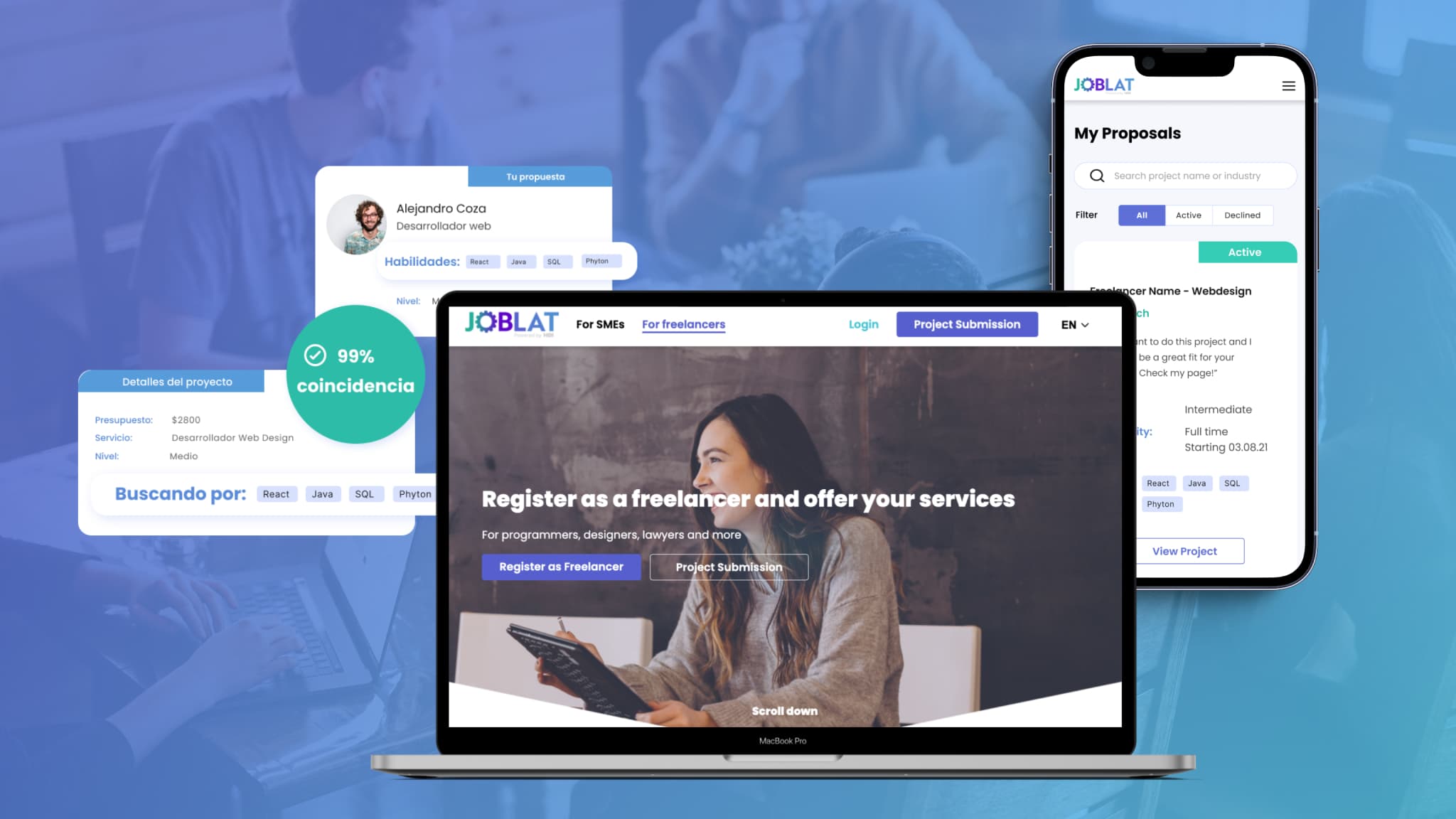
•Talent search & recommendations with facet filters; saved searches and shortlists.
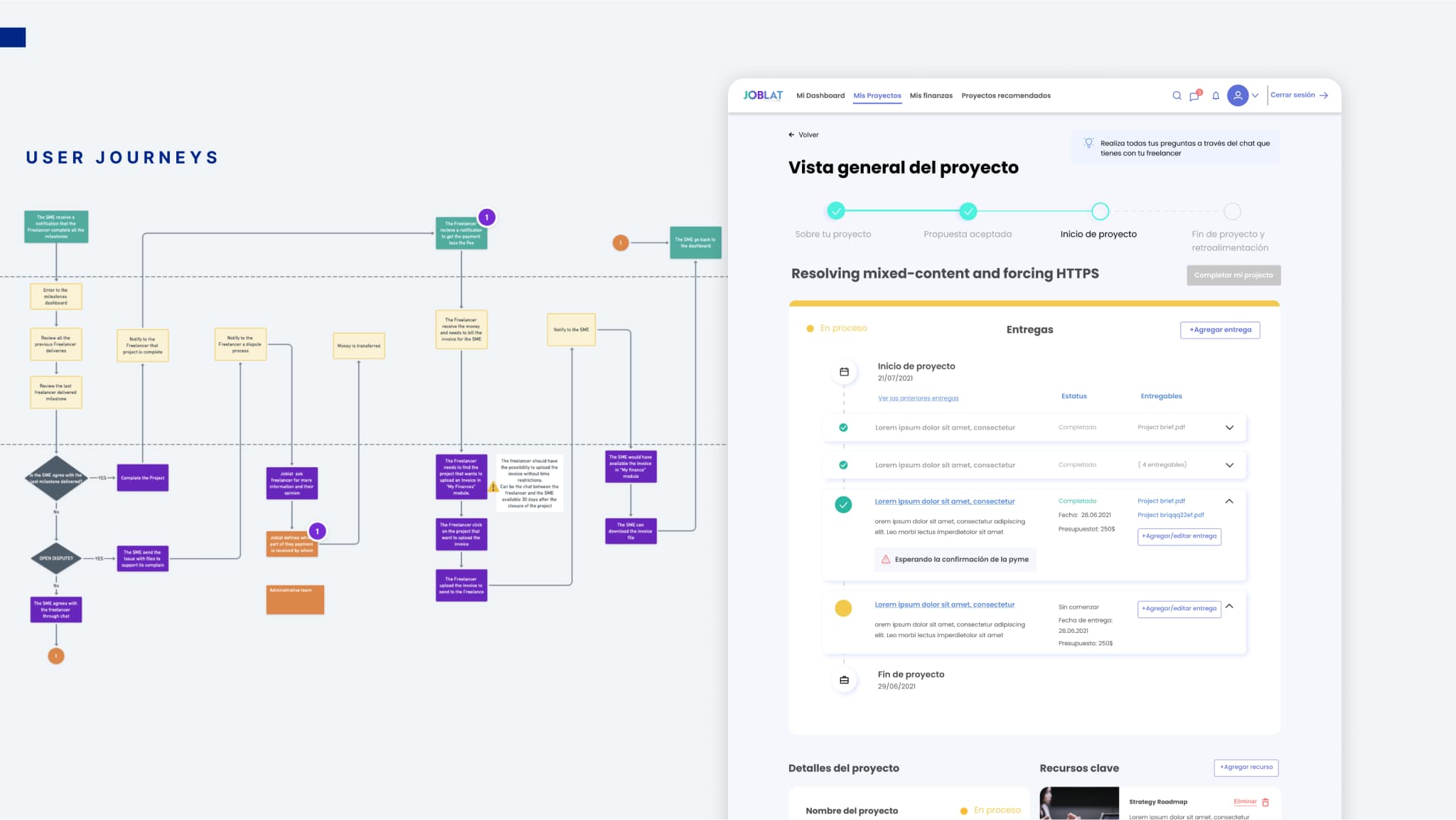
•Project space: proposals, milestones, messages, and status in one place.
•Payments & safety rails aligned to common LATAM patterns (escrow, milestone releases, receipts).
•Admin dashboard for verification, dispute workflows, and marketplace health.
Process
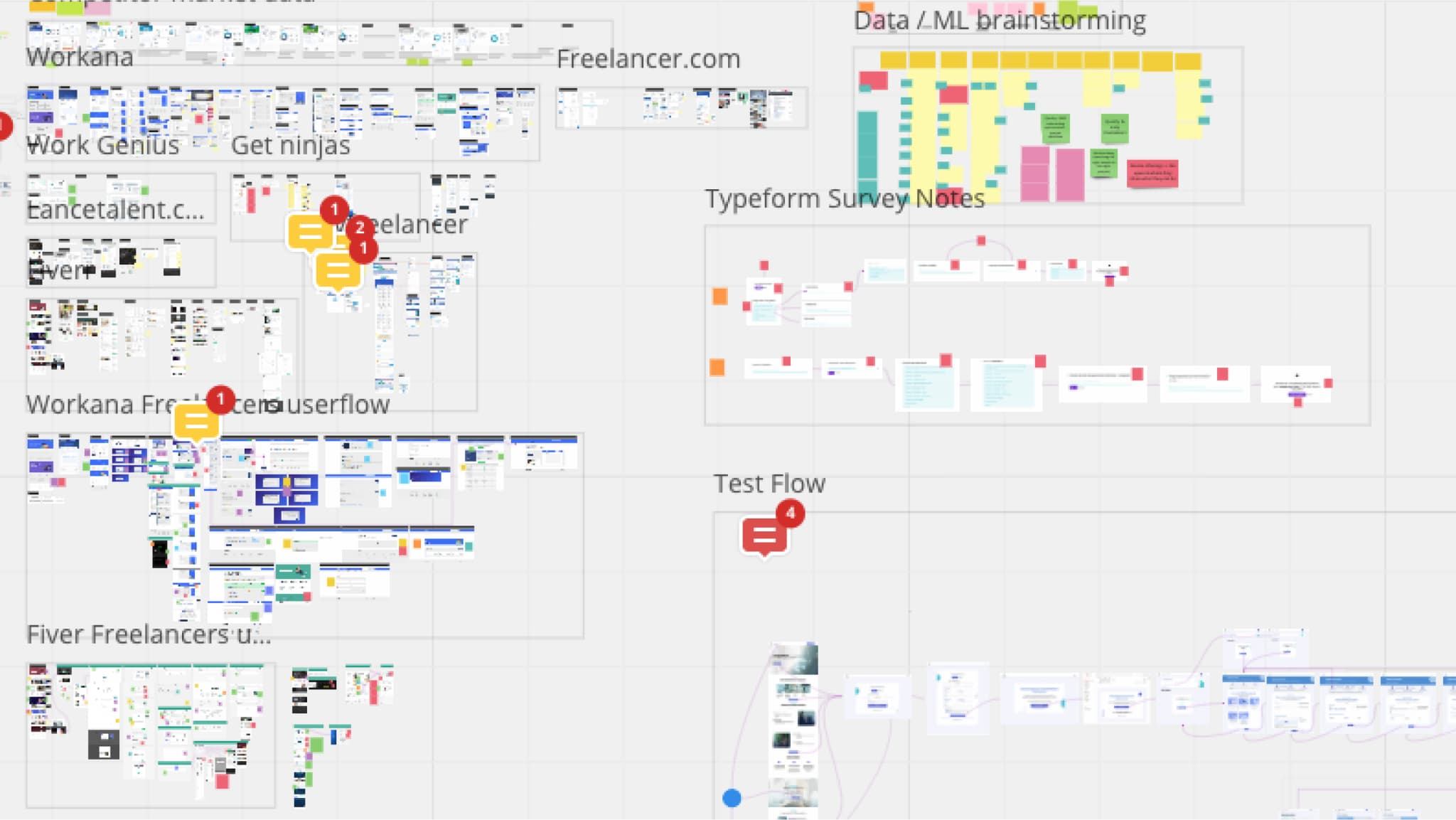
Discovery & framing•Interviews/surveys with SMEs & freelancers; competitor teardown of B2B platforms; risk list (trust, payments, liquidity).
•LatAm colleagues validated terminology, pricing norms, and content tone.
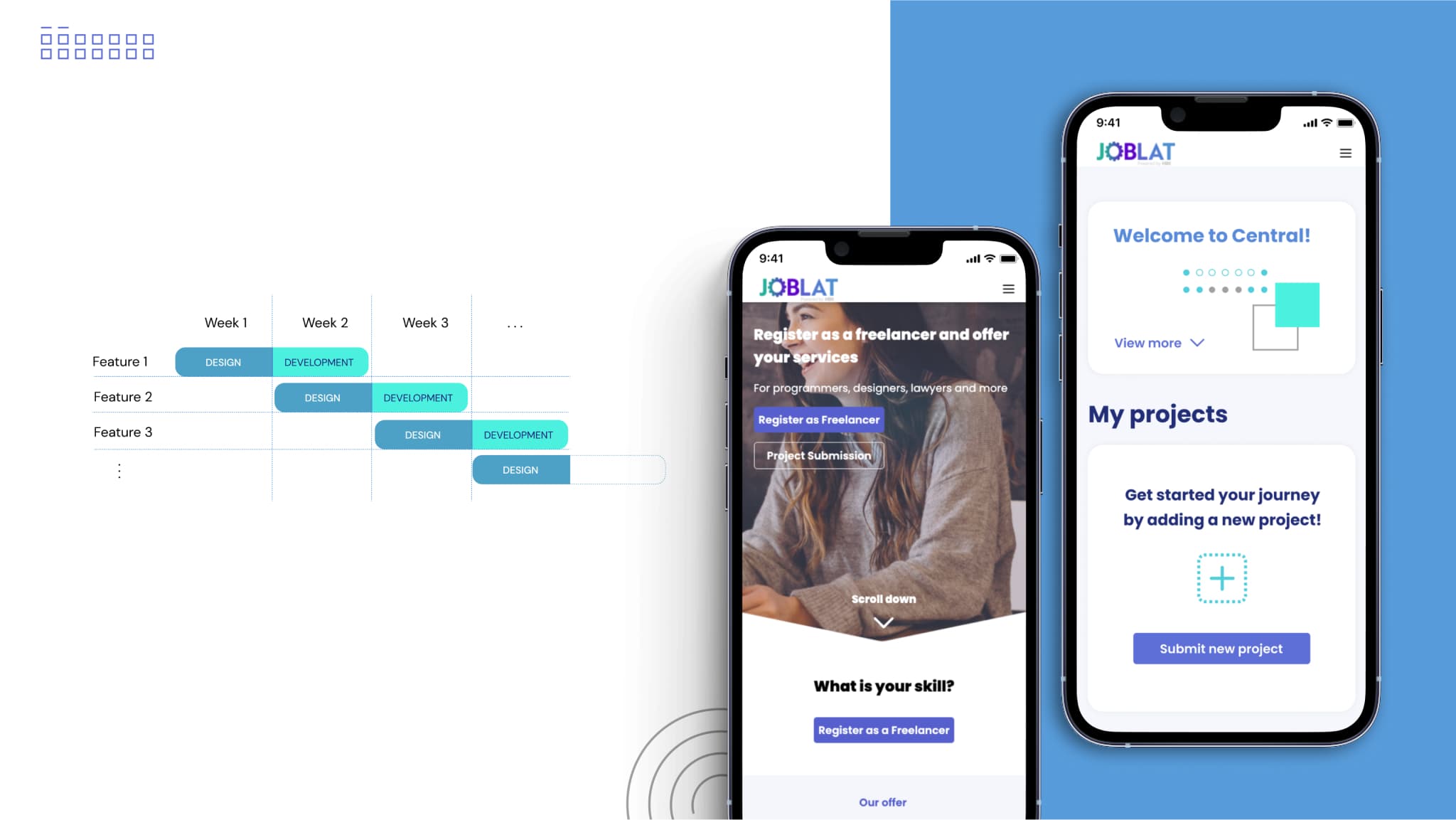
Sprint model (two weeks)•Week 1: low→mid-fi wires for a single flow, quick tests, iterate.
•Week 2: hi-fi, prototype, spec + states; handoff to dev while design starts the next flow.
Prototyping & testing•Interactive Figma prototypes for research and stakeholder demos; test tasks (create brief, respond, accept).
•Continuous usability passes; instrumented key steps for baseline → post-change comparisons.
Build & release•Tech: React (web) + Java backend; incremental feature flags; shared component inventory to keep velocity.
Learnings
•Design trust, not just UI: verified signals + clear proposal steps reduced abandonment more than extra visuals.
•Regional nuance matters: payment flow copy and defaults must reflect local expectations.
•Small bets compound: shipping smaller, testable slices every sprint beat big-bang releases.
What's next
•Supply shaping: expert vetting, badges, and calibrated rate guidance.
•Better matching: weighted signals (skills × availability × past success) and interview scheduling.
•Retention loops: post-project reviews, re-engagement nudges, and multi-milestone templates.